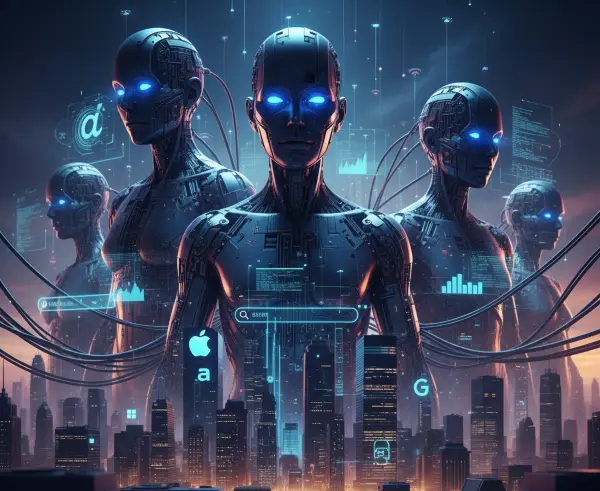
For more than a decade, smartphones have been the center of modern digital life. They replaced cameras, music players, GPS devices, and even wallets. But as we move beyond 2025, many of the world’s biggest technology companies believe the smartphone era is slowly reaching its limit.
Major tech giants like Apple, Google, Meta, Microsoft, OpenAI, and Neuralink are now investing over $150 billion into new technologies that could reduce or even replace the role of smartphones. These include augmented reality (AR) glasses, artificial intelligence (AI) assistants, brain-computer interfaces (BCI), and ambient computing systems.
The goal is clear: create technology that works around us naturally, without constant tapping, scrolling, or staring at a screen.
Why Tech Companies Are Moving Beyond Smartphones
The global smartphone market is no longer growing as fast as it once did. While shipments increased slightly in 2024, many users are keeping their phones longer and upgrading less often. At the same time, consumers are asking for more hands-free, private, and intelligent technology.
Key reasons behind this shift include:
-
Market saturation: Most people already own smartphones
-
Limited innovation: New models offer only small improvements
-
User fatigue: People want less screen time, not more
-
New AI abilities: Technology can now understand voice, gestures, and context
Industry analysts estimate that post-smartphone technologies could become a $3 trillion global market by the early 2030s.
What Could Replace or Reduce Smartphones?
Instead of one single device, experts believe the future will involve multiple connected technologies working together.
1. Augmented Reality (AR) Glasses
AR glasses are one of the strongest smartphone alternatives. They display digital information directly in front of your eyes, allowing users to see directions, messages, translations, or reminders without using a phone.
-
Meta is leading this space with Ray-Ban smart glasses and future AR models
-
Apple is working on lightweight AR glasses after launching Vision Pro
-
Google is developing Android XR for next-generation smart eyewear
AR glasses could handle navigation, communication, and daily notifications hands-free.
2. Artificial Intelligence Everywhere (Ambient AI)
AI is no longer limited to apps. Companies like OpenAI, Google, and Microsoft are building AI that lives in homes, offices, and wearable devices.
Examples include:
-
Voice-controlled assistants that understand context
-
AI that adjusts lighting, temperature, or schedules automatically
-
Smart environments that respond without commands
This is called ambient computing, where technology fades into the background.
3. Brain-Computer Interfaces (BCI)
Brain-computer interfaces allow people to control computers using brain signals. While still early, this technology could completely change human-computer interaction.
-
Neuralink, founded by Elon Musk, is testing brain implants
-
Early patients can type or control devices using thoughts
-
Long-term goals include medical treatment and enhanced communication
BCIs are not replacing smartphones soon, but they represent a radical future direction.
4. Wearables and Smart Devices
Instead of one main device, users may rely on multiple wearables, such as:
-
Smart glasses
-
Smart rings and watches
-
Health-monitoring sensors
-
Voice-controlled earbuds
These devices work together, reducing the need to pull out a phone.
How Big Tech Companies Are Preparing
Apple
Apple is expanding into spatial computing, where digital content blends with real space. While iPhones will remain important, Apple sees AR glasses as the future core device.
Meta
Meta is investing heavily in AR, AI, and virtual environments, aiming to make smart glasses as common as smartphones.
Google wants an open ecosystem, similar to Android, that supports AR devices, AI assistants, and smart environments.
Microsoft
Microsoft focuses on enterprise use, building mixed-reality tools for work, training, and industry.
OpenAI
OpenAI is pushing AI that works across devices, environments, and even robotics, reducing reliance on screens.
Challenges That Must Be Solved
Despite excitement, major challenges remain:
-
Privacy concerns: Always-on devices raise data questions
-
Battery life: Wearables need long-lasting power
-
Comfort and design: Devices must feel natural
-
Cost: New technology must be affordable
-
Social acceptance: Users must feel comfortable wearing AR devices
Solving these issues will determine how fast adoption happens.
When Will Smartphones Be Replaced?
Most experts agree smartphones will not disappear suddenly. Instead:
-
2025–2027: Early adoption of AR glasses and AI wearables
-
2027–2030: Wider consumer use, especially for work and navigation
-
After 2030: Smartphones may become secondary devices
Phones will likely remain, but their role will shrink over time.
Conclusion
Tech giants envision future beyond smartphones where technology feels more natural, intelligent, and invisible. Instead of staring at screens, users may interact through voice, vision, gestures, or even thoughts.
With massive investments, rapid AI progress, and changing consumer habits, the post-smartphone era is no longer science fiction—it is already beginning. While challenges remain, the next decade could redefine how humans interact with technology forever.
FAQs
1. Are smartphones really ending soon?
No, smartphones will not disappear immediately. However, their importance may decrease as new technologies take over many tasks.
2. What technology could replace smartphones?
AR glasses, AI assistants, wearables, and ambient computing systems are expected to reduce reliance on smartphones.
3. Which company is leading post-smartphone technology?
There is no single leader. Apple, Meta, Google, Microsoft, and OpenAI are all investing heavily in different areas.
4. Are AR glasses safe to use?
Most current AR glasses are considered safe, but long-term studies are still ongoing to address eye strain and privacy concerns.
5. What is ambient computing?
Ambient computing refers to technology that works quietly in the background, responding automatically to user needs without manual input.
6. When will AR glasses become mainstream?
Industry forecasts suggest AR glasses could become common between 2027 and 2030, depending on cost and usability.